LUANAR Strengthens Strategic Partnerships with Norwegian Institutions During High-Level Visit to Norway
Posted: November 23, 2026 Posted By: Gift Mkwambisi
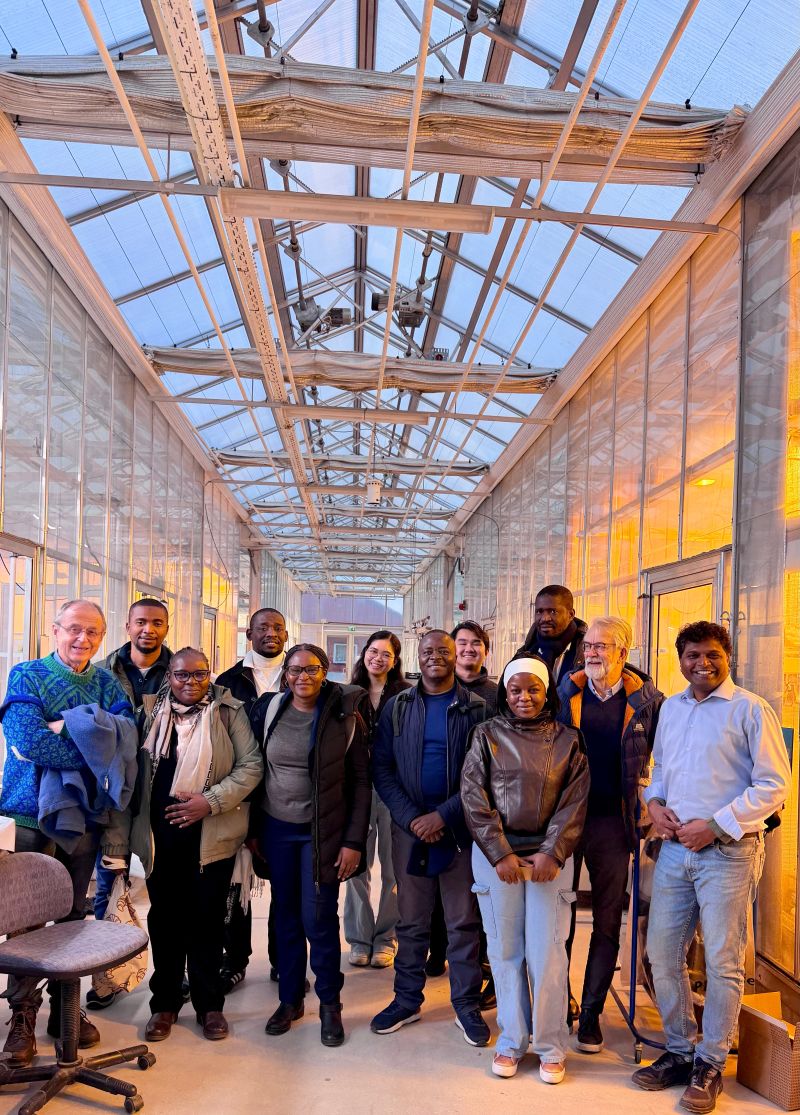
The Lilongwe University of Agriculture and Natural Resources (LUANAR) undertook a high-level strategic visit to Norway from 15 to 21 November 2026, aimed at strengthening longstanding institutional partnerships, exploring new research and innovation opportunities, and identifying sustainable funding mechanisms to support the University's strategic ambitions beyond the current Norwegian bilateral cooperation arrangements.
The visit, hosted by the Norwegian University of Life Sciences (NMBU), brought together a LUANAR delegation comprising the Programmes Coordinator, Dr. Moses Limuwa; Team Leader, Dr. Liveness Banda; Director of CARD, Dr. Innocent Pangapanga-Phiri; Social Scientist, Dr. Jessica Kampanje-Phiri; and Veterinarian, Dr. Madalitso Chelenga.
The visit came at an important time in the relationship between LUANAR and Norwegian institutions, in view of the planned closure of the Norwegian Embassy in Malawi in July 2027 and the changing landscape of international development cooperation. It therefore provided an opportunity for both institutions to reflect on achievements from more than three decades of collaboration and explore new approaches to sustaining and expanding the partnership.
A key engagement took place at NMBU's Department of International Environment and Development Studies (Noragric), where the two institutions reflected on their longstanding cooperation, including the implementation and achievements of the Sustainable Food Systems in Malawi (FoodMa) project amongst others. The discussions highlighted the contribution of FoodMa to strengthening research capacity, postgraduate training, institutional collaboration and evidence generation in Malawi's food systems. Among the notable achievements were the training of three PhD students, with another expected to graduate subsequently, alongside commissioned research studies, academic publications and initiatives aimed at translating research findings into practical development outcomes.
The proposed Post-FoodMa programme, joint academic publications, postgraduate training and potential NORHED III applications featured prominently in the discussions. The partners also explored opportunities for collaboration on research relating to large-scale agricultural investments and megafarms, including the potential to document lessons from Norway's experience and examine their relevance to Malawi.
The delegation also held discussions with the Norwegian Agency for Development Cooperation (NORAD) in Oslo on the future of development cooperation, global food security and opportunities for continued engagement between Norwegian institutions and African universities. The delegation also attended a seminar organised by NORAD for FAO’s Chief Economist (Dr. Maximo Torero) on Status and Drivers of Global Food Security. The NORAD engagement was important given the changing development cooperation environment and the anticipated transition from embassy-coordinated bilateral arrangements towards greater reliance on institutional partnerships, competitive funding mechanisms and multilateral cooperation.
Another significant engagement was held with the Norwegian Institute of Bioeconomy Research (NIBIO), where discussions focused on opportunities to strengthen collaboration in agricultural research, digital innovation, climate-smart agriculture and extension services. Particular attention was given to the MADPHIS project, which seeks to strengthen agricultural advisory services through digital technologies. The discussions explored the potential of integrating voice-based advisory systems, web applications, radio-based communication and SMS platforms into Malawi's public agricultural extension system. The partners also considered opportunities to build on existing collaboration with LUANAR and the Department of Agricultural Extension Services (DAES), while leveraging expertise at LUANAR's Bunda Campus and the Department of Agricultural Research Services (DARS). The discussions also explored the potential for developing African-led artificial intelligence solutions through collaboration between African research institutions and European partners. Opportunities to extend lessons from Malawi to other countries, including Tanzania, were also considered.
The delegation’s engagements with NMBU's Faculty of Biosciences (BIOVIT) provided an opportunity to explore research and innovation opportunities in plant breeding, biotechnology, crop improvement and sustainable agricultural production. Presentations and discussions highlighted Norway's advances in agricultural research, particularly in nitrogen-use efficiency, precision agriculture, plant genetics, Soil2Milk initiatives, phenomics and the development of improved crop varieties. The delegation gained insights into research approaches that combine advanced technologies with multi-location field trials to improve understanding of crop performance, nutrient-use efficiency and adaptation to changing environmental conditions. Discussions also highlighted opportunities for collaboration in soil health research, improved fertiliser management, seed systems and the development of organo-mineral fertilisers. Particular interest was expressed in strengthening research infrastructure, sharing research facilities and promoting collaborative data generation and management among institutions. The discussions further explored ongoing cowpea improvement initiatives involving Malawi, Tanzania and Mozambique, including the development of improved varieties and opportunities for their eventual commercialization. A key lesson from these engagements was the importance of connecting scientific research with practical agricultural applications, industry participation and the commercialization of research outputs.
The delegation also engaged with NMBU's Faculty of Veterinary Medicine researchers to explore opportunities for collaboration in animal health, veterinary sciences, livestock production, breeding and genetics. The discussions highlighted the importance of interdisciplinary research and the potential for strengthening a One Health approach that recognizes the interconnectedness of human, animal, plant and environmental health. For LUANAR, these engagements presented opportunities to leverage expertise across its faculties, particularly in Veterinary Medicine, Agriculture, Natural Resources, Food and Human Sciences, Development Studies and Life sciences. The discussions also emphasized the need to strengthen postgraduate training, joint research supervision, staff exchanges and collaborative research proposals addressing emerging agricultural and health challenges.
An important outcome of the visit was the presentation of the LUANAR–Norway Strategic Partnership Prospectus 2027–2032, which outlines opportunities for deepening institutional collaboration in line with LUANAR's emerging strategic priorities. The prospectus positions LUANAR as a strategic research, teaching and innovation partner and identifies opportunities for collaboration across five broad areas: teaching and learning excellence; transformative research and innovation; outreach and societal impact; financial sustainability; and entrepreneurship and industrialization. It also identifies potential areas of convergence between Malawi's development priorities, Norway's research and development cooperation interests, and LUANAR's institutional capabilities. The proposed areas include climate-smart agriculture, aquatic foods and fisheries, sustainable food systems, agricultural policy and markets, One Health, green energy and enterprise development. The prospectus further proposes a more structured LUANAR–NMBU partnership framework, with opportunities for joint postgraduate training, PhD supervision, staff and student exchanges, joint research programmes, collaborative publications and competitive funding applications.
The Norway visit has provided an important platform for strengthening relationships, identifying emerging research opportunities and positioning LUANAR for the next phase of international collaboration. The engagements underscored several priorities for follow-up, including advancing the Post-FoodMa programme concept, pursuing NORHED III opportunities, strengthening joint postgraduate training, developing collaborative research proposals with NMBU and NIBIO, and exploring alternative funding opportunities beyond traditional bilateral development assistance. Other priorities include strengthening student and staff mobility, promoting international industry attachments, improving research commercialization, developing digital agricultural advisory solutions and integrating research, teaching and innovation into the implementation of LUANAR's 2027–2032 Strategic Plan.
The visit also reinforced the importance of building on existing institutional relationships while expanding LUANAR's network to other Norwegian and European universities, research institutions, foundations and private-sector actors. As LUANAR positions itself for the next phase of institutional transformation, the strategic engagement with Norwegian partners represents an important opportunity to consolidate past achievements and build new partnerships that contribute to agricultural transformation, sustainable natural resource management, food security, job creation and inclusive economic development in Malawi.