Malawi Institute of Education Visits LUANAR to Learn About PSIP Implementation
Posted: March 8, 2026 Posted By: Kondwani Kapaula
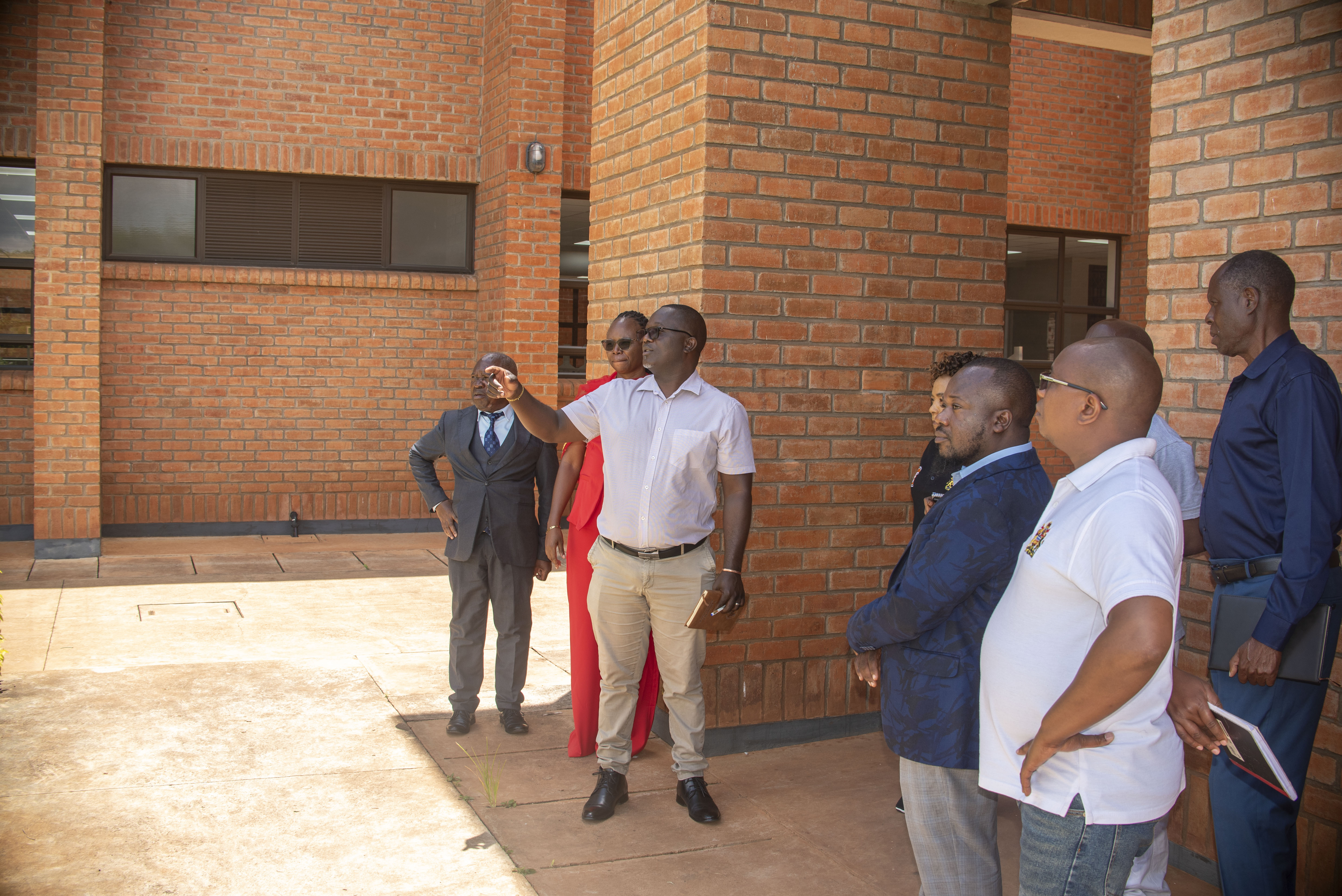
The Malawi Institute of Education (MIE) on 24 February 2026 conducted a learning visit to the Lilongwe University of Agriculture and Natural Resources (LUANAR) to appreciate the University’s experience in implementing Public Sector Investment Programme projects.
The Malawi Institute of Education (MIE) on 24 February 2026 conducted a learning visit to the Lilongwe University of Agriculture and Natural Resources (LUANAR) to appreciate the University’s experience in implementing Public Sector Investment Programme projects.
Welcoming the delegation, Bunda College Registrar Maxwell Mbweza expressed appreciation for the visit, describing it as an opportunity for mutual learning and strengthened inter-institutional collaboration.
The University highlighted its experience in managing several infrastructure and development projects, supported by established systems for financing, procurement, contracting and project monitoring.
Speaking during the visit, the leader of the delegation, Wisdom Bhunu said MIE is currently implementing the construction of a Training Complex under PSIP.
“While the project has made progress, the institution is facing several challenges and seeks to learn from LUANAR’s experience in managing similar projects successfully,” he said.
The delegation noted that LUANAR was identified as one of the leading public institutions in effectively implementing PSIP projects, which prompted the learning visit.
Discussions focused on key aspects of project implementation, including project planning and readiness for PSIP-funded initiatives, governance and institutional project management arrangements, and financial management systems such as disbursement processes and cash flow control.
The two institutions also discussed procurement and contract management within the PSIP framework, risk management, quality assurance and technical oversight mechanisms. Other areas of engagement included project sustainability and monitoring systems to ensure long-term impact.